Easy Optical characterization of mineral dust with Digital Holography
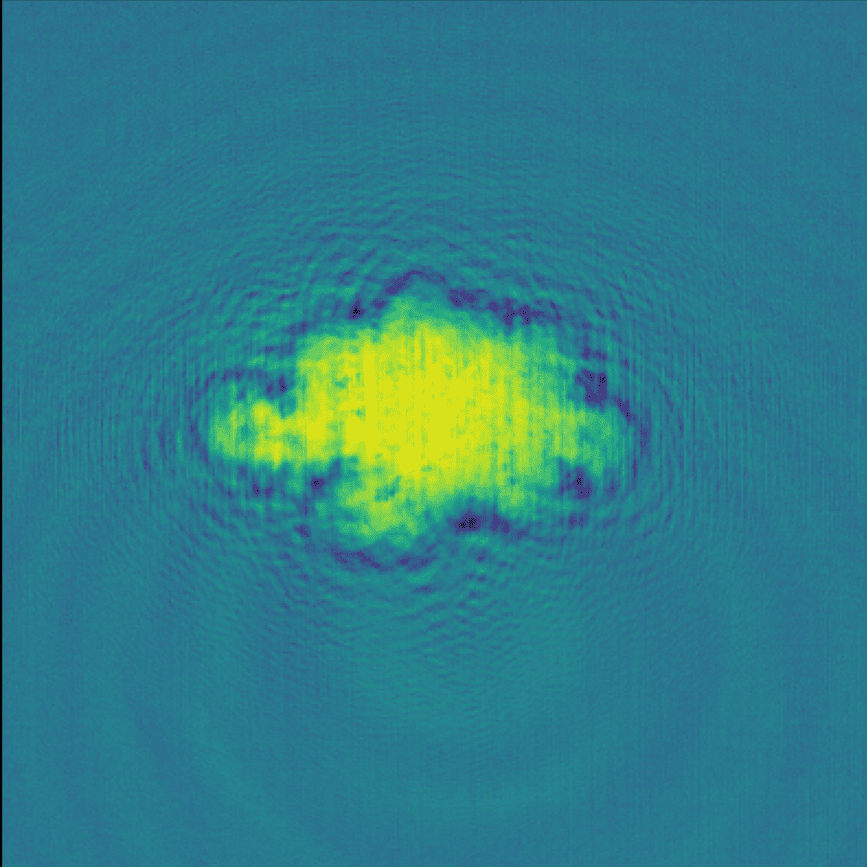
The code implements a holographic analysis technique to characterize individual mineral dust particles extracted from Antarctic ice cores. By illuminating the particles with a collimated laser beam and recording the resulting holograms through a microscope objective and digital camera, the method enables the retrieval of multiple optical and morphological parameters for each particle. This particle-resolved approach provides information on size, shape, and refractive behavior without assuming spherical symmetry. Such measurements are valuable for improving the representation of mineral dust optical properties in radiative transfer models, thereby contributing to reduced uncertainty in aerosol–climate interactions.
FOCUS: Fast Monte CarlO approach to Coherence of Undulator Sources
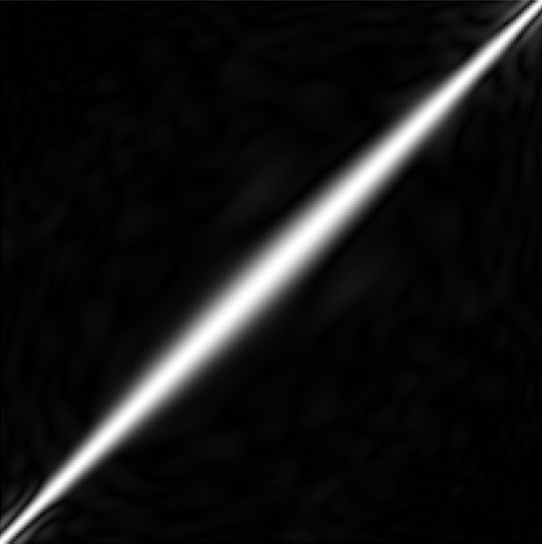
FOCUS is a GPU-accelerated Monte Carlo code for computing the transverse coherence of X-ray radiation emitted by ultra-relativistic electrons in undulators. It uses a Fourier optics formulation of classical electrodynamics, expressing the electric field in scaled variables and applying paraxial and resonance approximations. Field propagation is calculated via the parabolic Green’s function, and the approach can be extended to imaging setups by evaluating conjugate planes with appropriate magnification. The code is implemented in C++ with CUDA to enable efficient large-ensemble simulations.
DEDALO: Device for Enhanced Dust Anlyses with Light Obscuration sensors
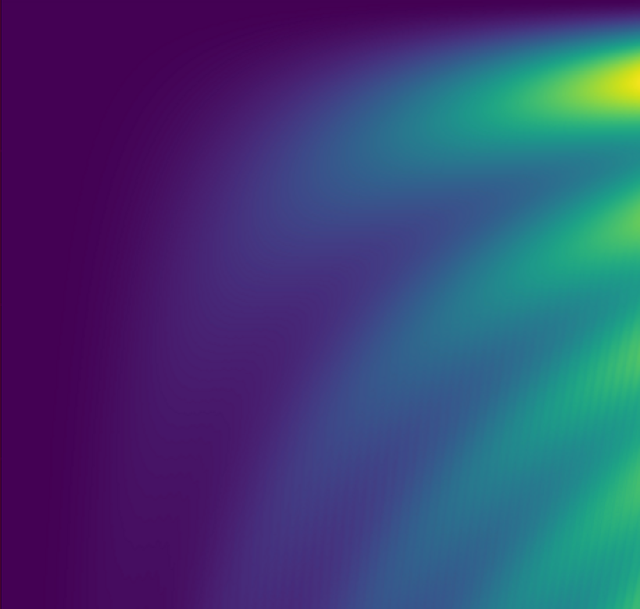
DEDALO is an open-source Python GUI designed to control an in-line Single-Particle Optical Sizing (SPOS) instrument and to post-process the resulting data by explicitly accounting for the refractive index of the analyzed particles. Standard SPOS calibrations assume polystyrene reference spheres, which leads to systematic size biases when the actual particle refractive index differs from that reference. DEDALO corrects this limitation by allowing the refractive index to be set according to sample composition, thereby improving the accuracy of particle size distributions. The software additionally retrieves the particle number concentration, computes the extinction cross-section using Mie theory with smoothing functions, and outputs both instantaneous and time-integrated PSDs along with statistical descriptors in spreadsheet- and text-compatible formats.